You're Not Their Patient, and They're Not Your Therapist — So Why Does It Feel That Way?
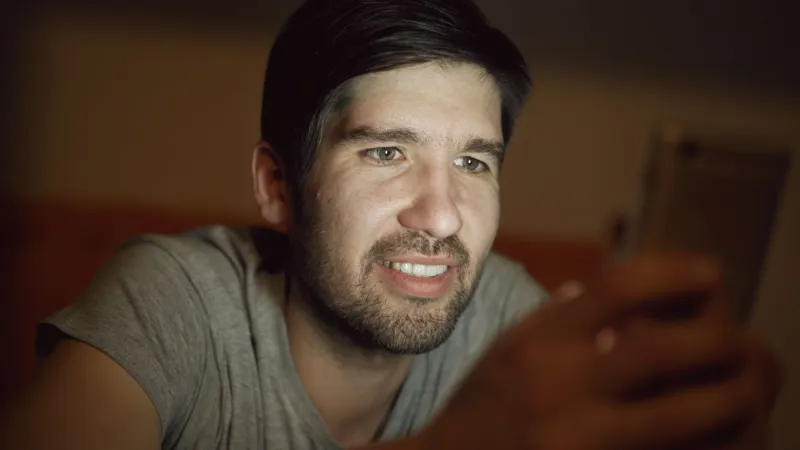
There's a specific kind of Tuesday night that a lot of people know. You're not exactly sad, not exactly fine. You open your phone, navigate to that one creator's channel — maybe it's a softly lit YouTube video, maybe it's a podcast you've had on your phone for two years — and something in your chest unclenches just a little. They start talking and it feels, genuinely, like someone gets it.
That feeling is real. The relationship, though? That part is worth examining.
The Comfort Pipeline Is Open 24/7
Content creators — especially those in the mental health, lifestyle, and "storytime" spaces — have become an unexpected fixture in how Americans process their emotions. According to a 2023 Pew Research report, nearly a third of U.S. adults under 30 say they've turned to online creators for emotional support or mental health guidance. That number climbs even higher among people who describe themselves as lonely or socially isolated.
And honestly, it makes sense. Therapy is expensive. Waitlists are brutal. Your friends are tired and busy and dealing with their own stuff. Meanwhile, there's someone on your screen who speaks slowly, makes eye contact with the camera, and says things like "if you're going through this right now, I want you to know you're not alone."
It's warm. It's accessible. It's free. And for a lot of people, it fills a gap that nothing else is currently filling.
But filling a gap and actually healing the wound underneath it are two very different things.
What Parasocial Actually Means (And Why It Matters)
The term "parasocial relationship" has been floating around internet culture long enough that it's started to lose its meaning. People use it as a punchline — "lol I'm so parasocial about this band" — without really sitting with what it describes: a one-sided emotional bond where one person invests genuine psychological energy into a relationship the other person doesn't know exists.
Psychologists first coined the concept in the 1950s to describe how TV audiences bonded with characters and hosts. Decades later, the dynamic is essentially the same, just turbocharged by algorithms that are specifically designed to maximize how much time you spend with someone's content. The more you watch, the more the platform shows you. The more you see them, the more familiar they feel. Familiarity, in the human brain, registers as closeness.
You don't form a parasocial bond because you're naive or broken. You form one because your brain is doing exactly what it evolved to do — it's just doing it in an environment it was never built for.
The Creator Side of This Is Exhausting
Here's the part that doesn't get talked about enough: the creators themselves are often caught in this dynamic too, and it's grinding them down.
When your audience starts treating your comment section like a crisis hotline, the pressure to show up — consistently, vulnerably, helpfully — becomes enormous. Creators who built audiences by being open about their own struggles with anxiety, depression, or grief often find themselves in an impossible position. Their authenticity attracted people who needed that kind of honesty. Now those people are depending on it. Stepping back feels like abandonment. Continuing feels like drowning.
Several high-profile creators have spoken publicly about this exact spiral. Emma Chamberlain touched on the weight of audience expectation. Mental health creators like Kati Morton have had to draw explicit lines around what they can and can't provide to followers. The burnout that comes from being someone's emotional anchor — for thousands or millions of people simultaneously — is a specific kind of exhaustion that doesn't have a clean name yet.
And when creators do set those limits? The reaction from some corners of their audience can be genuinely cruel. Because for those followers, it doesn't feel like a content creator adjusting their boundaries. It feels like abandonment.
Projection in High Definition
One of the trickier psychological layers here is how much of what feels like "connection" is actually projection. When a creator shares something vulnerable, viewers don't just hear it — they map their own experiences onto it. The creator becomes a kind of mirror, and people fall in love with the reflection.
This isn't cynical. It's human. We do this with books, with movies, with celebrities. But the intimacy of the creator format — the direct address to camera, the casual tone, the sense of ongoing relationship built across dozens or hundreds of videos — makes the projection feel especially personal. You're not just identifying with a character. You feel like you know this person.
Except you don't. You know a version of them that has been edited, lit, and algorithmically optimized for your continued engagement. That's not an accusation — it's just the reality of the medium. Even the most authentic creator is still performing in some sense. The most honest podcast is still a produced artifact.
What Happens When It Ends
Creators go on hiatus. They change. They burn out. They say something that breaks the spell. And when that happens, the audience member who built a real emotional scaffolding around that person's content is left holding something that has no official name and no obvious support system.
We wrote about this in a previous piece on influencer grief — that strange, disenfranchised mourning that happens when someone you never met is suddenly gone from your life. The feelings are legitimate. The problem is that there's nowhere to put them, and no one around you who necessarily understands why you're upset about a YouTuber going quiet.
This Isn't a Hit Piece on Creators or Their Audiences
Let's be clear: content creators who talk openly about mental health, grief, anxiety, and the messiness of being alive are doing something valuable. The destigmatization of mental health conversation in this country has been meaningfully accelerated by people willing to be honest on camera. That matters.
And audiences who find comfort in those voices aren't doing something pathetic or embarrassing. They're doing what humans do — reaching for connection wherever they can find it.
But there's a real difference between a creator who helps you feel less alone and one who becomes a substitute for doing the actual work of building relationships, seeking professional help, or sitting with discomfort long enough to understand it.
The question worth asking isn't "is this creator good for me?" It's "what am I using this creator instead of?"
Every Voice Has Its Limits
BlogXilla exists because we believe in the power of diverse voices and the genuine communities that form around them. That's not nothing. But part of celebrating creator culture honestly is acknowledging where it bumps up against its own limits.
Your favorite creator can be a companion, an inspiration, a starting point for conversations you didn't know you needed to have. What they can't be — no matter how much it feels like they could — is your therapist, your best friend, or your emotional foundation.
That job belongs to the messy, inconvenient, reciprocal relationships in your actual life. And if those feel thin right now, that's worth paying attention to — not outsourcing to a screen.