Murder, Merch, and Microphones: How Female Podcasters Made True Crime About Themselves
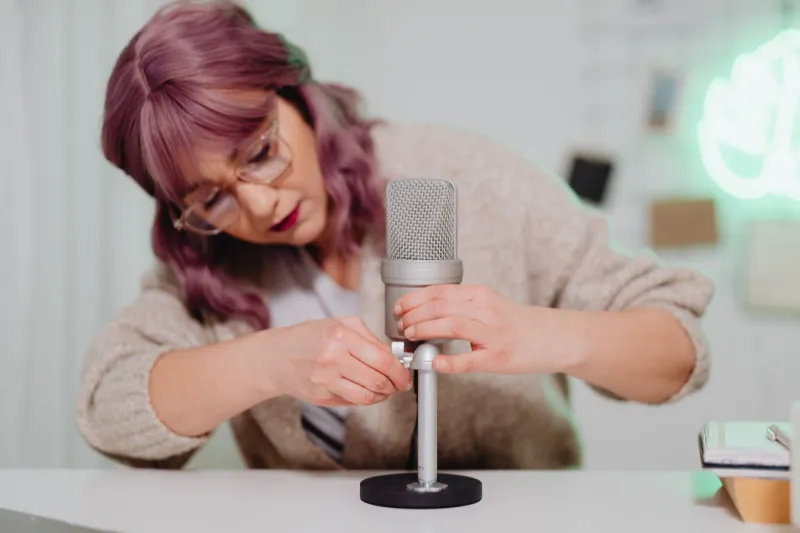
Somewhere between a glass of wine and a deeply personal anecdote about anxiety, the true crime podcast was reinvented. It didn't happen in a boardroom or a journalism school. It happened in home studios, spare bedrooms, and kitchen tables across America, where a wave of women grabbed a microphone and decided that their emotional response to a murder was just as important as the murder itself.
And honestly? It worked. Hugely.
The 'My Favorite Murder' Effect
When Karen Kilgariff and Georgia Hardstark launched My Favorite Murder back in 2016, they weren't playing by the traditional true crime rulebook. There were no somber narrators, no dramatic re-enactments, no pretense of journalistic objectivity. Instead, there were two women cracking jokes, oversharing about their mental health, and casually recapping some of history's most disturbing cases like they were catching up over brunch.
The audience lost their minds — in the best possible way. MFM built a devoted community called the Murderinos, sold out live tours, launched a book, and proved that there was an enormous appetite for true crime content that felt personal, messy, and real. It opened a door, and approximately ten thousand other podcasters sprinted through it.
Now the solo female true crime host is practically its own archetype. She's relatable. She's got opinions. She probably has a Patreon and a merch store. She might cry during an episode, and she'll definitely tell you how the case made her feel before she tells you what happened to the victim.
Accessibility vs. Exploitation: A Genuinely Messy Question
Here's where things get complicated, and where voices across the creator space genuinely disagree.
On one hand, this format has done something remarkable: it brought true crime to people who would never sit through a dry, documentary-style podcast. By centering empathy and personality, these hosts made it easier for listeners to connect emotionally with victims' stories. When a host says "this case broke me" or "I couldn't sleep after researching this," it signals to the audience that these were real people whose lives mattered — not just data points in a crime statistic.
There's also a feminist argument to be made here. For decades, true crime was largely a male-dominated space, with male journalists, male detectives, and male narrators framing stories that disproportionately involved female victims. Women stepping into that space and saying we have something to say about this is not nothing. It's actually kind of a big deal.
But — and this is a significant but — the personality-first format comes with real risks.
When a host spends fifteen minutes riffing on her own dating life before getting to the story of a woman who was murdered by her partner, something starts to feel off. When the episode ends with a promo code for a meal delivery service, the tonal whiplash can be genuinely jarring. Critics, including some true crime fans themselves, have started pushing back on what they call "grief tourism" — the idea that these hosts are building personal brands on the backs of real tragedies without always treating those tragedies with the weight they deserve.
Families of victims have occasionally spoken out, too. A few have described the experience of hearing their loved one's death recapped with jokes and tangents as deeply painful, even when the host's intentions were clearly good.
The Parasocial Piece
What makes this phenomenon so distinctly creator culture is the parasocial layer baked into the whole thing. Listeners don't just tune in for the cases — they tune in for the host. They feel like they know her. They follow her Instagram, they send her DMs, they defend her in Reddit threads when someone dares to criticize an episode.
That parasocial bond is actually part of what makes the format so effective. When you trust someone, you're more willing to sit with uncomfortable subject matter. A host who feels like your funny, self-aware friend makes the darkness of true crime easier to metabolize.
But it also means the host's personal brand becomes inextricably tied to the content. And that's where the incentive structure gets a little murky. If your audience loves you and loves true crime, what happens when a case is genuinely too heavy for jokes? Do you pivot to a more serious tone and risk losing the vibe your audience came for? Or do you stay on brand and risk trivializing something that deserves more?
Different podcasters have answered that question differently, and the results are all over the map.
Is There a Better Way to Do This?
Some hosts have found a middle ground that feels more sustainable. Shows that blend personal voice with rigorous research — actually interviewing sources, citing journalism, acknowledging the limitations of their knowledge — tend to weather the criticism better. There's a real difference between "I looked this up on a wiki and here are my feelings" and "I spent three months reporting this story and here's what I found."
The best of these podcasts manage to be both human and responsible. They make you laugh and make you cry, but they never let you forget that the story belongs to the people who lived it — not to the person telling it.
The worst ones, frankly, are just vibes and a Spotify deal.
The Xilla Takeaway
The girl-bossification of true crime — if we're going to use that slightly cringeworthy term — is neither purely good nor purely bad. It's a genuinely fascinating collision of feminism, entertainment, grief, and personal branding that says a lot about where digital content is right now.
Female voices in this space have expanded who gets to tell these stories and who gets to listen to them. That matters. But the genre is also at a crossroads, where the pressure to build an audience and a brand can quietly push the actual victims further and further out of frame.
Every voice deserves a platform — that's kind of our whole thing here at BlogXilla. But some stories deserve a little more reverence than a merch drop can offer.